Home › Industrial and Heavy-Duty Asphalt Paving
Handle your toughest traffic with industrial asphalt paving in Orlando, FL. We design heavy duty pavements for truck courts, loading docks, equipment yards, and warehouses. Thicker sections and strong base construction resist rutting and failure. Get engineered asphalt solutions that stand up to constant heavy loads and turning movements.
Prestige Asphalt Orlando provides professional industrial asphalt paving throughout Orlando, FL and the surrounding area. Our licensed, insured crew delivers safe, clean, on-time work with a free estimate before anything begins. Call (407) 974-6993 or request your free quote.
Industrial Asphalt Paving Built For Orlando Workloads
Industrial asphalt paving is a different animal from a basic parking lot. At Prestige Asphalt Orlando, we design pavements to stand up to forklifts, fully loaded semis, container stacks, fuel delivery trucks, and constant turning traffic on hot Florida days.
When you call us about industrial or heavy-duty asphalt, the first thing we do is walk the site with you. We look at how trucks move, where they turn, where they stop and idle, and where loads are stored. In Orlando, we frequently pave for distribution centers near the airport, manufacturing plants in South Orlando, and warehouse yards along the SR 528 and I-4 corridors, each with different stresses on the pavement.
From that walkthrough, we decide where you truly need heavy-duty build (like loading docks and drive lanes) and where a standard section is fine (like employee parking). That mix-and-match approach often saves money compared to overbuilding everything. We also factor in your operations, such as shift changes, container stacking patterns, and fuel or chemical loading zones, to recommend asphalt thicknesses and base designs that will hold up for years in our heat and rain.
How Industrial Asphalt Paving Is Actually Built
For industrial asphalt paving, the structure under the surface is just as important as the blacktop you see.
1. Subgrade evaluation and stabilization
We start by checking the native soil with proof rolling and, if needed, a nuclear density gauge test. In many parts of Orlando, the natural soil is sandy and drains well, but we still find pockets of organics or soft fill behind older buildings. If we hit a soft area, we undercut it and replace it with compacted base or, in extreme cases, use geotextile fabric to stabilize it. This step prevents future tire ruts and slab pumping.
2. Base installation
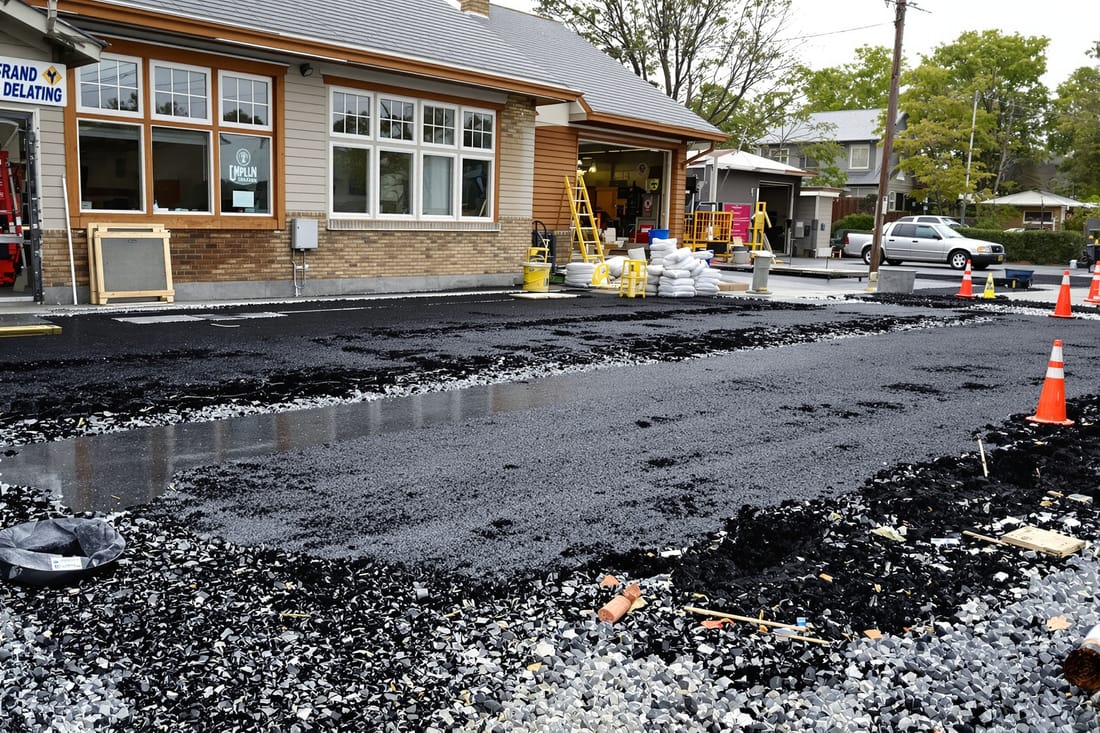
For heavy-duty areas like truck courts and loading docks, we typically install 6 to 10 inches of crushed limestone or granite base, compacted with a vibratory roller in lifts. Employee parking areas might only need 4 to 6 inches. We set slopes during this phase so water runs to inlets and swales, not toward your docks or warehouse doors.
3. Asphalt layer design
Industrial asphalt paving usually involves at least two layers. A typical heavy-duty section in Orlando could be 2 to 3 inches of surface mix over 3 to 4 inches of base (binder) mix. For extremely heavy or frequent truck traffic, we may go thicker or add a third lift. We use Florida DOT approved hot mixes that are designed to handle high temperatures and resist rutting. Where forklifts and container loaders turn sharply, we may recommend a stiffer mix or slightly thicker section to reduce shoving and scuffing.
4. Paving and compaction
We bring in a self-propelled paver and lay the asphalt in controlled widths so we can maintain temperature and compaction. Our crew follows behind with steel drum and pneumatic rollers to reach the target density, which we verify with field testing. Joints between passes are carefully overlapped and compacted to avoid future cracking along seams.
5. Curing and striping
In Florida heat, asphalt sets quickly. Most industrial sites can reopen within 24 hours for car traffic and 48 to 72 hours for heavy trucks, depending on thickness and weather. Once the pavement is ready, we add striping, truck staging lines, dock numbering, and any required stencils like fire lanes and no parking areas.
Cost Drivers And Budget Choices For Heavy-Duty Pavement
Industrial asphalt paving costs more than a basic lot, but there are predictable reasons. Understanding them helps you budget and prioritize.
Thickness and section type
The biggest cost factor is total asphalt and base thickness. A truck court with 3 inches of surface mix over 4 inches of base mix on top of 8 inches of aggregate will cost more per square foot than a car-only lot with half that structure. At Prestige Asphalt Orlando, we often design two or three pavement sections on the same property, so you only pay for heavy-duty thickness where trucks actually run.
Base work and soil conditions
If your existing site has poor subgrade, old unsuitable fill, or saturated areas, we may need more excavation, more base material, or fabric stabilization. These steps add cost but prevent expensive failures later. We are honest about when you can reuse existing base after pulverizing and recompacting and when you cannot.
Access, phasing, and downtime
On active Orlando facilities, we frequently stage the work in phases so your trucks keep moving. Night work, weekend work, or complex traffic control can increase labor costs, but they save you operational headaches. We will talk through your shipping schedules and peak hours to find the right balance.
Drainage and tie-ins
Upgrades to drainage, such as new inlets or reworking concrete flumes and curbs, can add line items to the project. Proper drainage is critical in Central Florida, where afternoon storms can dump heavy rain. We check how the new asphalt will tie into existing concrete aprons, scales, and dock slabs to avoid ponding and trip hazards.
Long-term maintenance plan
Sometimes it makes sense to invest a bit more up front in a thicker section or better mix, then save on maintenance over the next decade. Other times, especially if you plan to redevelop in 5 to 7 years, we can design a good performing but more modest pavement and pair it with a clearly defined maintenance schedule that fits that shorter horizon.
Local Codes, Permits, And Practical Orlando Considerations
Industrial asphalt paving in Orlando is not just about trucks and thickness charts. Local rules and conditions matter.
Permitting and inspections
In the City of Orlando and Orange County, larger industrial paving projects often require a site development permit, especially if you are changing drainage patterns, expanding impervious area, or modifying driveways that tie into public roads. Prestige Asphalt Orlando coordinates with your civil engineer or, on smaller jobs, can help you understand when a permit is likely required before you schedule work. Some projects may trigger stormwater review or require a drainage report.
Stormwater and environmental concerns
Industrial sites along the I-4 corridor and near the airport are often inside regulated stormwater basins. We design slopes and elevations so water drains to existing inlets or ponds, not into neighboring properties or streets. If your operation involves fuel or chemicals, we can recommend pavement layouts that minimize standing water in those areas and facilitate spill cleanup.
Heat, rain, and scheduling
Our Central Florida climate affects how we pave. In summer, we often start early to avoid the hottest afternoon temperatures and the predictable thunderstorms. We plan truck deliveries and rolling patterns so the mix is compacted at the right temperature, not too hot and not too cool. For 24/7 operations, such as distribution centers and cold storage, we often schedule work at night when traffic is light and temperatures are better for compaction.
Coordination with utilities and neighbors
We check for shallow utilities and coordinate with any ongoing construction on your site so paving does not interfere with future work. For industrial parks with multiple tenants, we often communicate with neighboring businesses so everyone knows which drives will be accessible during each phase of the project.
What To Expect When You Work With Prestige Asphalt Orlando
Our goal is to keep your operation moving while building pavement that truly lasts. Here is how the process usually works with Prestige Asphalt Orlando.
Site visit and loading analysis
We start with a free site visit to understand your traffic patterns, vehicle types, and operational constraints. You tell us about current problem areas, such as rutting at docks, potholes in truck lanes, or poor drainage. We may ask about axle loads, container stacking, or any plans to change how you use the yard in the next few years.
Design and proposal
We put together a clear proposal with drawings that show heavy-duty versus standard-duty areas, recommended thicknesses, base specs, and drainage considerations. We spell out which areas will be removed and replaced, which can be milled and overlaid, and where we suggest full-depth reconstruction.
Phasing and communication
Before work starts, we create a phasing plan and traffic plan. That might mean routing trucks in a loop for a few days, temporarily using a side gate, or paving on weekends. We coordinate with your operations or facility manager so deliveries, outbound loads, and employee parking are impacted as little as possible.
Construction and quality control
During paving, you will see us checking slopes with lasers or string lines and checking compaction with field density tests. Foremen walk the site with you at key milestones, such as after base is placed and after the first asphalt lift, so you are comfortable with progress. Any unexpected issues, such as bad subgrade in one corner, are discussed and priced transparently before we proceed.
Post-project support
When the work is complete, we walk the site again, review any warranty terms, and talk about practical maintenance, such as when to schedule the first sealcoat, how to handle minor fuel spills, and which areas to keep an eye on as truck volumes grow. Our crews are local, so if a dock plate causes scuffing or a drain needs adjustment, you are not waiting on an out-of-town contractor to come back.